Admin
Blog Author
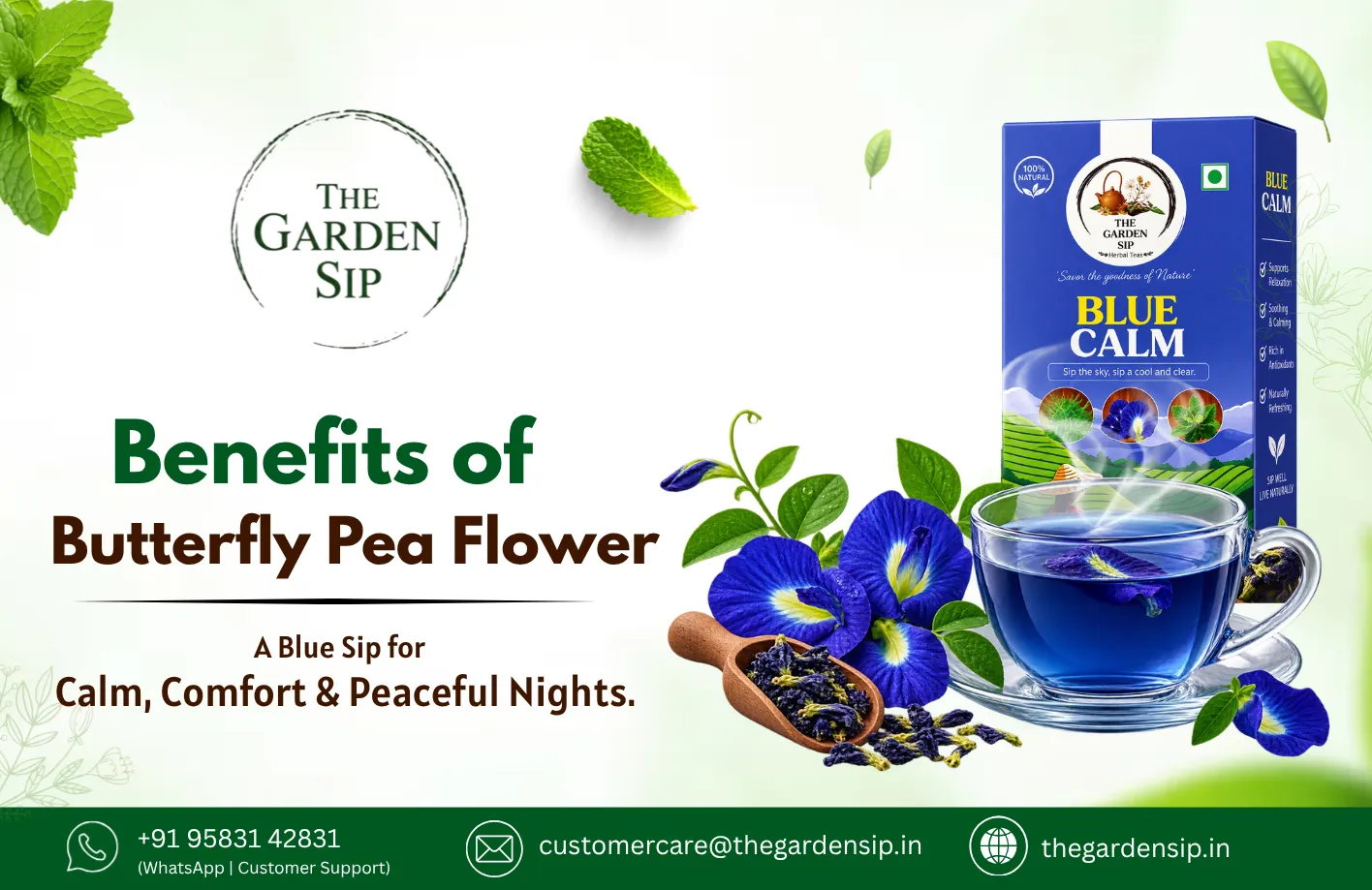
Admin
Blog Author
Yes, butterfly pea flower is a good choice before bed , it's naturally caffeine-free, doesn't spike your system, and is traditionally sipped in the evening across Southeast Asia as part of a wind-down ritual. It won't knock you out like a sedative, but it gives your evening a calm, unhurried feeling that pairs naturally with winding down. That's exactly the space Gardensip's Blue Calm Tea is built for.
If you've landed here searching "butterfly pea flower before bed," you're probably looking at that striking blue cup on your feed and wondering whether it's just a pretty drink or something that can genuinely fit into a nighttime routine. Here's a clear, no-hype breakdown.
Butterfly pea flower comes from the Clitoria ternatea plant, native to tropical Southeast Asia. Once dried and steeped in hot water, the petals release a deep, vivid blue color , no dye, no additives, just the flower's natural pigments called anthocyanins. Squeeze in a little lemon or lime and you'll watch the cup shift from blue to violet in seconds, a fun, harmless reaction caused by the change in acidity.
Beyond the visual novelty, butterfly pea flower has a long history in traditional Ayurvedic and Southeast Asian practices, where it was valued as a calming, everyday infusion rather than a medicinal cure. It has a mild, slightly earthy taste with no bitterness, which is part of why it blends so easily with other calming botanicals.
Why People Reach for It Before Bed
There are a few practical reasons butterfly pea flower shows up in evening routines:
It's naturally caffeine-free. Unlike green or black tea, there's no stimulant to interfere with your ability to relax. You can drink a full cup close to bedtime without worrying about it working against you.
It's rich in anthocyanins. These are the same class of antioxidant compounds found in blueberries and other deeply colored fruits. Antioxidants support the body's response to everyday oxidative stress, which is one reason butterfly pea flower is often grouped with other "nourishing" evening botanicals.
The ritual itself is calming. Steeping a cup, watching the color develop, and slowing down for a few quiet minutes is part of what makes any bedtime tea useful , the behavior of pausing and sipping matters as much as what's in the cup.
It's gentle on the stomach. Because it's mild and non-acidic on its own, it's an easy tea to have after dinner without digestive discomfort.
It's worth being clear-eyed here: butterfly pea flower is not a sedative and won't "put you to sleep" the way a supplement might. Its value before bed is as a calming, caffeine-free ritual , not a sleep aid in the clinical sense.
What Gardensip's Blue Calm Tea Does
Gardensip's Blue Calm Tea is built around butterfly pea flower as its base, blended with other soothing botanicals to create an evening cup that's easy to fold into a nightly routine. The idea behind it is simple: give people a caffeine-free option that looks as good as it feels to drink, so the ritual of making tea becomes something you actually look forward to at the end of the day. A few things to know about how it fits into a wind-down routine: No caffeine, no jitters. You can drink it right before bed without disrupting your ability to settle down. A calming pour-over ritual. The color-changing effect (blue to purple with citrus) makes it a small, enjoyable moment rather than a chore. Pairs well with a screen-free wind-down. Many people brew a cup as the signal to put the phone away and start easing into the evening. If you're exploring what else is in the lineup, Gardensip's Blue Calm Tea collection outlines the full ingredient list and brewing notes, and it sits alongside the brand's other evening blend, Serene Sleep, for anyone who wants a slightly different flavor profile on rotation.
How to Brew Butterfly Pea Flower Tea for the Evening
Getting the most out of a bedtime cup comes down to a simple process:
Heat water just off the boil , around 90–95°C (195–205°F) is enough to draw out the color and flavor without scorching the petals.
Steep for 5–7 minutes. Butterfly pea flower needs a slightly longer steep than most herbal teas to fully release its blue pigment.
Strain and enjoy as is, or add a twist of lemon if you want to see the color shift and add a light citrus note.
Skip the sugar rush. If you want sweetness, a small amount of honey works better before bed than refined sugar.
Because it's naturally light and non-acidic, it's also fine to drink it plain , no additions needed.
Butterfly pea flower is generally well tolerated, but a few sensible notes apply, as with any herbal tea:
If you're pregnant, nursing, or on medication, check with a healthcare provider before making it a regular habit, simply because herbal ingredients can interact with certain conditions.
It's not a substitute for addressing ongoing sleep issues , if you're dealing with persistent insomnia, that's worth discussing with a doctor rather than relying on tea alone.
Some people notice mild stomach sensitivity with any new herbal tea; start with one cup and see how your body responds.
A Quick Look at Its Traditional Roots
Butterfly pea flower's evening reputation isn't new , it's just newly popular in the West. In Thailand, it's brewed as "nam dok anchan" and served both hot and cold. In Ayurvedic practice, it's referred to as Aparajita and has long been associated with calm and quiet reflection rather than stimulation. That centuries-long pattern of evening use is part of why it has become a go-to base for modern bedtime blends , it was already doing this job long before it became a trend on social feeds. A helpful overview of the flower's traditional background and uses is available from Traditional Medicinals' herb library, which covers its folklore and botany in more depth.
This context matters because it explains why butterfly pea flower tends to show up paired with other traditionally calming botanicals , chamomile, lavender, lemongrass , rather than with energizing ones like ginseng or green tea. The plant's role has consistently been about slowing down, not speeding up.
How It Compares to Other Bedtime Teas
If you're used to chamomile or valerian root at night, butterfly pea flower is a different kind of cup. Chamomile has a slightly sedative reputation backed by more clinical research; valerian root has a strong, earthy flavor that not everyone enjoys. Butterfly pea flower's advantage is its mildness , it doesn't have a strong herbal bite, which makes it easier to drink consistently, and its lack of any noticeable sedative pull means it won't leave you groggy if you have it a little earlier than plann
Building It Into a Realistic Nightly Habit
The tea itself only does part of the job. Pairing it with a few consistent habits tends to make the biggest difference:
Brew it at the same time each night. Consistency helps your body associate the ritual with winding down, regardless of what's in the cup.
Dim the lights while it steeps. Combining the tea with lower lighting reinforces the wind-down cue.
Put the phone in another room. Screens work against the calm that a bedtime tea ritual is meant to support.
Keep the cup small. A modest 8–10oz serving is easier on the bladder overnight than a large mug.
None of this replaces medical advice for sleep issues, but as a low-effort addition to an evening routine, it's an easy habit to keep.
If you're looking for a caffeine-free, low-effort way to signal to your body that the day is winding down, butterfly pea flower fits that role well. It's not going to replace good sleep hygiene , dim lights, a consistent bedtime, less screen time , but it can be a pleasant, calming addition to that routine rather than competing with it.
For anyone who wants the color, the calm, and the caffeine-free profile in one blend, Gardensip's Blue Calm Tea is designed exactly for that slot in the evening , brewed, sipped, and enjoyed as part of settling down for the night.
Frequently Asked Questions
Is butterfly pea flower tea good to drink before bed? Yes , it's naturally caffeine-free, so it won't interfere with winding down the way caffeinated teas can.
Does butterfly pea flower tea make you sleepy? It's not a sedative; its value before bed comes from being caffeine-free and calming as part of a wind-down ritual, not from inducing drowsiness directly.
What does butterfly pea flower tea taste like? It has a mild, slightly earthy flavor with no bitterness, making it easy to drink on its own or with a splash of citrus or honey.
Can you drink butterfly pea flower tea every day? Most people can enjoy it daily since it's caffeine-free and mild, though anyone pregnant, nursing, or on medication should check with a doctor first.
Why does butterfly pea flower tea turn purple? Adding an acidic ingredient like lemon or lime changes the tea's pH, which shifts the natural anthocyanin pigments from blue to purple.
Crafted in Chennai with 100% natural, whole botanicals and no artificial flavouring.
Our team is ready to help you curate the perfect corporate gifting experience. Send us a message on WhatsApp and we'll get right back to you.